
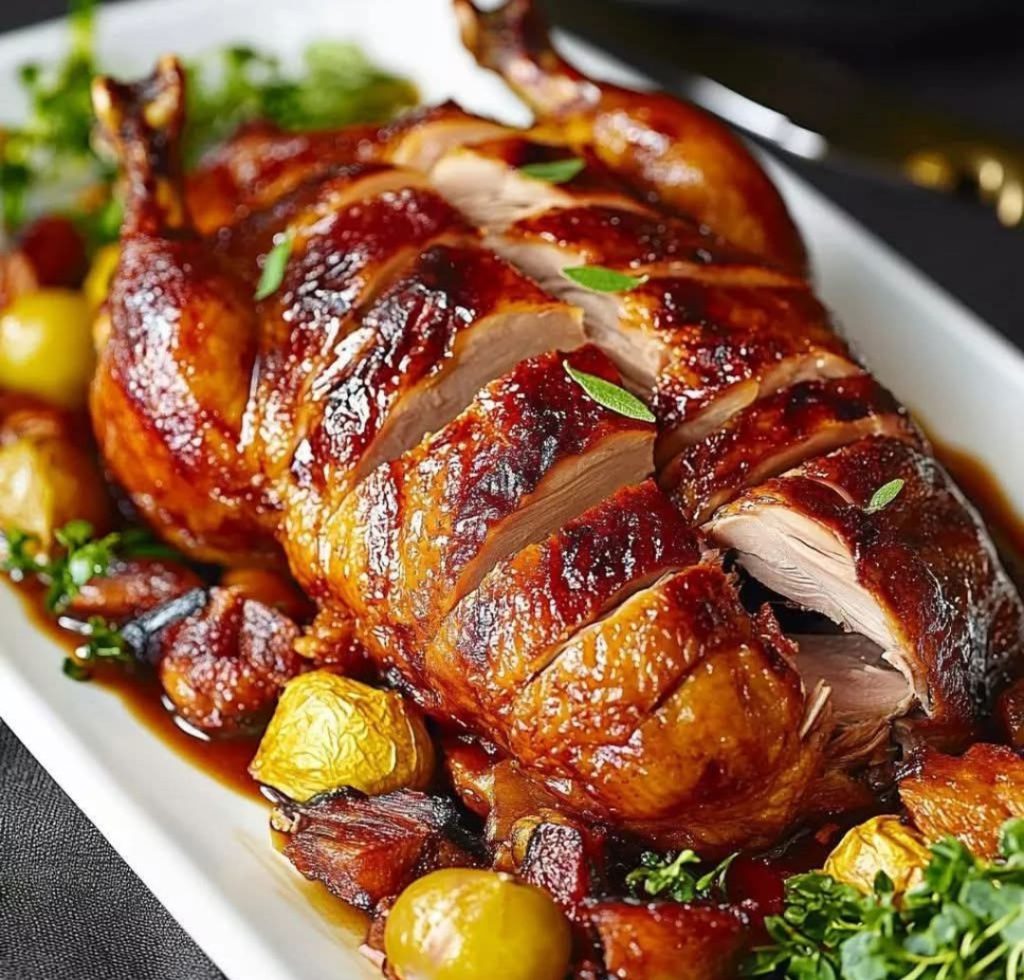
4 pon duck, whole
6 garlic cloves
1 Orange
1 tbsp rosemary, fresh
1 tbsp thyme, fresh
2 tbsp kosher salt
Step 1: Preparing Your Duck
Start by preheating your oven to 375°F (190°C). While the oven is heating, remove the whole duck from its packaging and remove the giblets from the cavity; set these aside if you plan to make a sauce later. Rinse the duck under cold water to thoroughly clean it before patting it dry with paper towels—this step is important because surface moisture can prevent the duck from becoming crispy during roasting.
Next, use a sharp knife to make shallow incisions in the skin in a crisscross pattern—be careful not to cut into the meat! This allows the fat underneath to render more effectively during cooking and provides additional surface area for crispy skin later.
Once the duck is properly sliced all around (especially around the thighs), sprinkle salt evenly both inside the cavity and all over the outside, using about two tablespoons total—this ensures even seasoning throughout and promotes the desired crispiness as the roasting process begins.
Step 2: Seasoning the Cavity
After sprinkling salt evenly over the outside of the poultry, it’s time to add some seasoning! Start by stuffing the quartered orange into the cavity along with the whole garlic cloves mentioned above, and the herbs (thyme and rosemary). These flavors will blend beautifully, releasing a fragrant aroma throughout the house as it cooks! Make sure the stuffing doesn’t block the airflow inside the cavity so the heat circulates evenly during the roasting process, contributing to consistently cooked results without any dryness!
Step 3: Roasting
Transfer the prepared duck to a roasting pan fitted with a rack positioned above the bottom layer, so that the drippings collect below without directly touching the meat! Place the pan into the preheated oven, making sure to leave enough space around the edges for air to circulate freely—this will ensure even cooking throughout, preventing uneven burnt areas from developing later due to improper heat distribution across the surface that occurred in the previous step before the roasting phase begins now!
Let about an hour pass before checking the internal temperature regularly using a reliable meat thermometer inserted deep into the thigh area, avoiding contact with the bone—as soon as the temperature reaches about 74°C (165°F), quickly remove from the oven and cover loosely with aluminum foil placed on an untouched surface to allow the juices to distribute evenly throughout, ensuring a moist texture when sliced and shared with friends and family!