
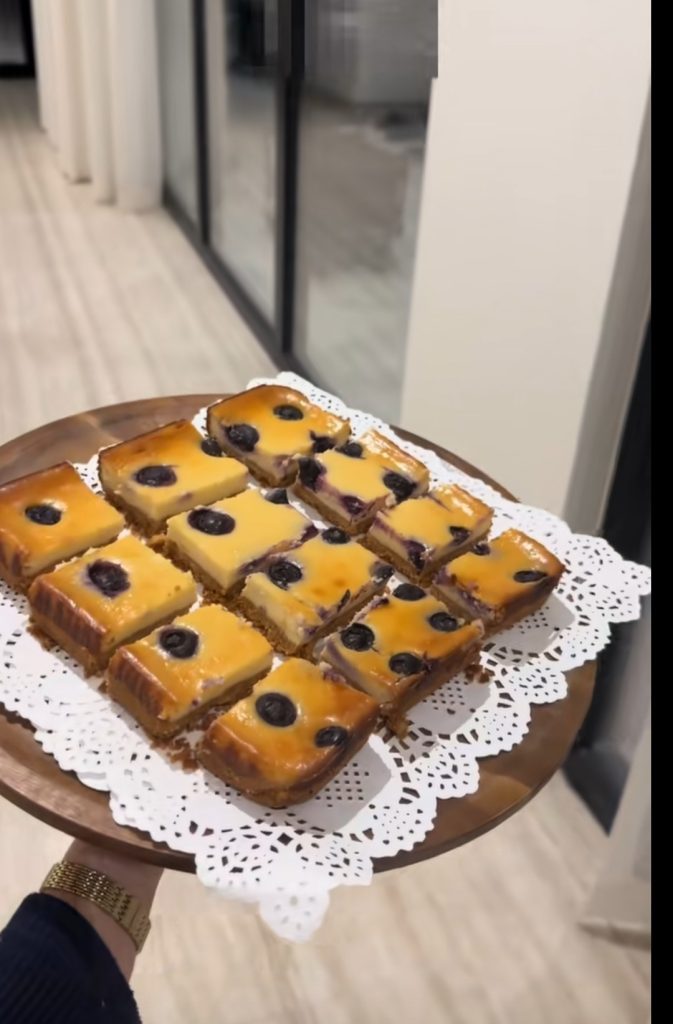
A Velvet-Smooth Cheesecake with a Fresh Blueberry Crown
This baked cheesecake combines the rich, creamy texture of classic cheesecake with the fresh brightness of blueberries on top — a dessert that feels indulgent yet homey. It’s perfect to serve after dinner, at family gatherings, or whenever you crave something sweet and elegant.
Ingredients
For the Crust
- 1 ¼ cups (≈ 150 g) crushed digestive biscuits (or graham crackers)
- 5–6 tablespoons (≈ 70 g) unsalted butter, melted
- 2 tablespoons granulated sugar (optional, for a slightly sweeter crust)
For the Cheesecake Filling
- 900 g full-fat cream cheese, at room temperature
- 1 cup granulated sugar (≈ 200 g)
- ½ cup (≈ 120–240 ml) sour cream or heavy cream (depending on richness desired)
- 4 large eggs, at room temperature, lightly beaten
- 1 teaspoon pure vanilla extract
- Optional: 1–2 teaspoons freshly grated lemon zest (for a subtle citrus lift)
For the Topping
- Fresh blueberries (as many as you like)
- (Optional) Blueberry glaze or fruit sauce ― for a glossy, bakery-style finish
Preparation Steps
1. Prepare the Crust
- Preheat your oven to 175 °C (350 °F).
- In a medium bowl, mix the crushed biscuits with the melted butter (and sugar if using) until the crumbs are evenly moistened.
- Press the mixture firmly into the bottom of the springform pan (and slightly up the sides if desired), using the bottom of a measuring cup or glass for even compaction.
- Bake the crust for about 8–10 minutes, until lightly golden. Let it cool while you prepare the filling.
2. Make the Creamy Filling
- In a large bowl, beat the cream cheese on medium-low until completely smooth and free of lumps. Scrape down the sides of the bowl as needed.
- Gradually add the sugar and continue beating until the mixture is creamy and smooth.
- Mix in the sour cream (or heavy cream), vanilla extract, and lemon zest (if using) until combined.
- Add the eggs one at a time, mixing gently after each addition — don’t overbeat. Over-mixing can introduce too much air and lead to cracking.
3. Bake the Cheesecake
- Pour the filling over the cooled crust, smoothing the top gently with a spatula. Tap the pan lightly on the counter to release any air bubbles.
- Place the pan in the center of the oven. Bake at 150–160 °C (≈ 300–325 °F) for 50–60 minutes, or until the edges are set and the center still jiggles slightly when you tap the pan gently.
- Once baked, turn off the oven and crack the door open slightly. Leave the cheesecake in the warm oven for about 1 hour — this helps prevent cracks.
- Remove from the oven and let cool to room temperature. After that, refrigerate for at least 4–6 hours (overnight is ideal) until completely set.
4. Add the Blueberry Topping & Serve
- Once the cheesecake is fully chilled and set, top it generously with fresh blueberries.
- Optionally, drizzle a blueberry glaze or fruit sauce for a glossy finish.
- For clean slices, dip a sharp knife in hot water and wipe it dry before each cut.
Presentation & Serving Suggestions
- Serve each slice with a few extra blueberries or a spoonful of fruit compote on the side.
- Add a light dusting of powdered sugar for a refined bakery-style look.
- Garnish with a fresh mint leaf or a thin lemon slice to enhance visual appeal and add a hint of freshness.
- Pair with a hot cup of coffee, a delicate tea, or a refreshing iced berry drink — the creamy richness of the cheesecake balances beautifully with light, refreshing beverages.
Engagement Questions for Your Readers
- Do you prefer a classic plain cheesecake or one topped with fruit like blueberries, strawberries, or raspberries?
- Have you ever tried using a water bath (bain-marie) for baking cheesecake — do you think it makes a difference?
- Would you like a variation of this recipe with a fruit swirl inside the cheesecake (rather than just on top)?
Important Notes for Success
- Always use full-fat cream cheese and full-fat dairy for the creamiest texture. Low-fat alternatives often result in a grainy or watery cheesecake.
- Make sure all ingredients are at room temperature before mixing — this helps achieve a smooth, lump-free batter.
- Don’t over-mix once the eggs go in: over-beating adds too much air, which can lead to cracking as the cheesecake cools.
- Cooling slowly (first in the turned-off oven, then to room temperature, then in fridge) helps prevent cracks and ensures a creamy, silky texture.
- Chill thoroughly before slicing to get clean, firm slices. A hot, clean knife helps with neat presentation.
Frequently Asked Questions (FAQ)
Q: Can I substitute sour cream with heavy cream or yogurt?
Yes — sour cream gives a slight tang and richness, but heavy cream or full-fat plain yogurt both work. The texture may be slightly different (heavier or creamier, respectively).
Q: Why did my cheesecake crack on top?
Common causes: over-mixing the batter (adds too much air), baking at too high temperature, or cooling too quickly. Slow, gradual cooling helps prevent cracks.
Q: Can I bake it using a water bath (bain-marie)?
Absolutely — wrapping the pan in foil and placing it in a larger pan filled with hot water helps bake cheesecake evenly and reduces the risk of cracks. Many bakers prefer this method for a silky texture.
Q: How long does the cheesecake stay good in the fridge?
Stored in an airtight container, it keeps well for 3–5 days.
Q: Can I freeze leftover cheesecake?
Yes — you can freeze cheesecake (without fresh fruit topping) for up to 1 month. Thaw in the fridge overnight before serving, and add fresh blueberries just before serving for the best texture and flavor.