
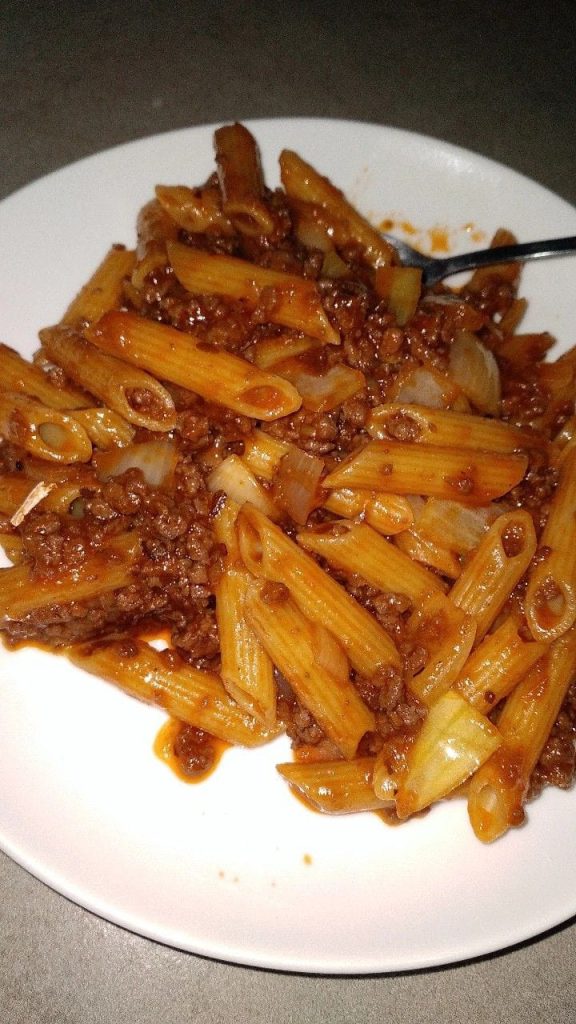
Why You’ll Love This Dish
Craving comfort food that hits the spot every time? This penne pasta tossed in a savory, deeply flavored meat sauce delivers that warm, home-cooked satisfaction. Its tomato-rich, slightly spicy sauce clings perfectly to the ridged tubes of penne, creating a simple but deeply satisfying meal. Whether you’re cooking for yourself or feeding family or friends, this dish is a go-to for a cozy dinner that tastes like an Italian trattoria — with minimal fuss.
Ingredients
400 g (about 14 oz) penne pasta
300–350 g (about 10–12 oz) ground beef (or a mix of beef and lamb)
1 medium onion, finely chopped
2–3 cloves garlic, minced
400 ml (about 14 oz) canned crushed tomatoes (or tomato sauce)
2 tablespoons tomato paste (optional, for deeper flavor)
1 tablespoon olive oil
Salt, to taste
Freshly ground black pepper, to taste
1 teaspoon dried oregano (or Italian seasoning)
½ teaspoon red chili flakes (optional, for a bit of heat)
½ cup water or low-sodium broth (if sauce needs thinning)
Grated Parmesan cheese or similar hard cheese, for serving (optional)
Fresh parsley or basil, chopped, for garnish (optional)
Step-by-Step Preparation
- Boil the pasta. Fill a large pot with plenty of water and bring it to a rolling boil. Add a generous pinch of salt. Add the penne and stir immediately to prevent sticking. Cook for about 11–13 minutes — or until the pasta is “al dente”: tender but with a bit of bite.
- Meanwhile, prepare the sauce. While the pasta cooks, heat the olive oil in a large skillet or saucepan over medium heat. Add the chopped onion and cook until softened (about 4–5 minutes). Add the minced garlic and sauté for another minute until fragrant.
- Brown the meat. Add the ground beef to the skillet. Break it apart with a spatula and cook until browned and no longer pink — about 6–8 minutes. Season with salt, pepper, and if using, chili flakes.
- Build the tomato sauce. Once the meat is browned, stir in the tomato paste (if using) and cook for 1 minute. Then pour in the crushed tomatoes (or tomato sauce). Add the dried oregano (or Italian seasoning). Stir well. If the sauce seems too thick, add up to ½ cup of water or broth to reach your desired consistency.
- Simmer. Reduce the heat and let the sauce simmer for about 10 minutes, stirring occasionally. This allows the flavors to meld and the sauce to thicken slightly. Taste and adjust seasoning as needed.
- Combine pasta and sauce. When the pasta is cooked, drain it (reserving a splash of pasta water if you like). Immediately add the hot penne to the sauce. Toss gently so each piece is well coated. If the sauce seems too thick, add a bit of the reserved pasta water to loosen it.
- Finish and serve. Serve hot, topped with freshly grated Parmesan cheese and a sprinkle of chopped parsley or basil if desired.
Serving Suggestions (Professional Touches)
Serve with a crisp green salad (e.g., arugula or mixed greens with lemon-olive oil dressing) to balance the richness.
Pair with a loaf of crusty bread or garlic bread — great for soaking up any extra sauce.
Offer freshly grated Parmesan or Pecorino cheese at the table so diners can tailor the richness to their taste.
For a complete meal, consider a side of roasted vegetables (e.g., zucchini, bell peppers, or eggplant) — they complement the tomato-meat sauce nicely.
Discussion Questions (For Food Lovers & Readers)
How do you prefer your pasta: strictly al dente, or a little softer?
Would you use a different type of meat (e.g. ground turkey, lamb, or a mix), and how do you think that would change the dish?
What additional ingredients (vegetables, herbs, cheeses) would you add to elevate this simple pasta dinner?
How would you adapt this recipe for a vegetarian or vegan version while preserving the hearty feel?
Important Notes for Success
Use plenty of boiling water when cooking the pasta — overcrowded pot or too little water can lead to sticky, unevenly cooked pasta.
Taste the pasta before draining to ensure you hit the right “al dente” texture. Once drained, pasta continues to cook slightly, especially when mixed with hot sauce.
Don’t rinse cooked pasta — the residual starch helps sauce cling better, improving texture and flavor.
If you like a creamier, richer sauce, a small splash of pasta water added while tossing helps create a velvety sauce that hugs every piece of penne.
Adjust salt after combining pasta and sauce, since the pasta water may contribute additional saltiness.
Frequently Asked Questions (FAQ)
Q: Can I use a different type of pasta (e.g. spaghetti, fusilli) instead of penne?
A: Yes — but cooking times vary. Short, ridged pasta like fusilli will behave similarly to penne; long pasta like spaghetti may cook faster. Always check package instructions and taste for doneness.
Q: Can I prepare the sauce in advance and combine with pasta later?
A: Absolutely. If the sauce is ready, cook the pasta fresh, drain, and heat quickly with the sauce before serving. If storing pasta separately, undercook it by 1–2 minutes, toss with a little olive oil to prevent sticking, refrigerate, then reheat gently in sauce.
Q: I want a spicier dish — how can I do that?
A: Increase the red chili flakes, or add a pinch of cayenne pepper or a few dashes of hot sauce. Fresh chili or crushed chili can work too. Always taste as you go.
Q: Is it better to use fresh or dried pasta for this recipe?
A: Dried pasta works well and gives the familiar texture shown in the photo. Fresh pasta cooks much faster and has a softer, more delicate texture — you would need to reduce cooking time accordingly.