
A Warm Welcome to Comfort Food
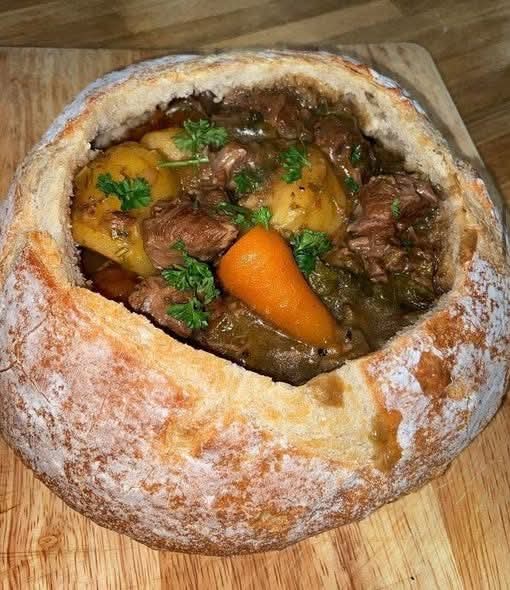
Imagine digging into a rustic loaf of crusty bread filled to the brim with rich, slow-cooked stew — tender meat, soft potatoes, carrots, and aromatic herbs bathing in a savory broth. This dish brings together the heartiness of a stew and the warmth of freshly baked bread, making it perfect for cold evenings, cozy dinners, or when you just need something comforting. A bread-bowl stew is as much about the experience — breaking the bread shell as you scoop — as it is about the flavors inside.
Ingredients
For the Stew
- 1.5 lb (≈ 700 g) beef stew meat (e.g. chuck roast), cut into bite-sized cubes
- Salt and freshly ground black pepper, to taste
- 2 tablespoons all-purpose flour (for dredging the meat)
- 2–3 tablespoons vegetable oil or olive oil, for searing
- 1 large onion, finely chopped
- 3–4 cloves garlic, minced
- 2–3 large carrots, peeled and cut into chunks or thick slices
- 2–3 medium potatoes (Yukon Gold or russet), peeled and diced into chunks
- 4 cups (≈ 1 L) beef broth (or enough to just cover ingredients)
- Optional: ½ cup dry red wine (adds depth)
- 2 tablespoons tomato paste (for richness and extra umami) — enhances flavor and thickens the sauce
- Herbs & seasonings: 2 bay leaves, 1 teaspoon dried thyme, 1 teaspoon dried rosemary (or fresh if available)
- Optional: 1 cup frozen peas (added near the end)
For the Bread Bowls
- 4 round loaves of crusty bread (e.g. sourdough, Italian boule — large enough to hold stew)
- Butter (optional, for brushing inside bowls)
For Garnish (optional)
- Fresh chopped parsley (for color and fresh flavor)
Preparation Steps
- Prep the meat
- Pat the beef cubes dry with paper towels. Season generously with salt and pepper.
- Toss the beef with flour until evenly coated — this helps thicken the stew as it cooks.
- Sear the meat
- Heat oil in a heavy-bottomed pot or Dutch oven over medium-high heat.
- Working in batches (to avoid overcrowding), add beef cubes and sear until browned on all sides. Remove seared meat and set aside.
- Sauté the aroma base
- In the same pot, add a bit more oil if needed. Sauté chopped onions until translucent and starting to color. Add garlic and cook until fragrant.
- Stir in tomato paste and cook for a minute or two to deepen its flavor. This step adds richness and helps build a glossy, savory broth.
- Deglaze & build the stew
- If using wine: pour in the red wine, scraping up any browned bits from the bottom of the pot; let it reduce slightly.
- Return the browned beef to the pot. Add the diced potatoes, carrots, herbs (bay leaves, thyme, rosemary), and enough beef broth to just cover all ingredients. Stir gently to combine.
- Simmer
- Bring the stew to a gentle boil, then reduce heat to low, cover partially, and let it simmer for about 1.5–2 hours — or until the beef is fork-tender and the vegetables are soft. The slow cooking brings out depth and melds flavors beautifully.
- About 15 minutes before the end, stir in the frozen peas (if using) and adjust seasoning (salt, pepper) as needed.
- Prepare the bread bowls
- While stew is simmering (or once it’s nearly ready), take your round loaves and slice off the top “lid.” Hollow out the inside, leaving a thick enough shell to hold the stew without leaking. Some crumbs/scrap bread can be saved or used as croutons.
- Optional: Brush the interior of the hollowed bread bowls with butter and toast them in the oven at ~350 °F (175 °C) for 5–7 minutes to firm them up — this helps the bread resist becoming too soggy once filled.
- Assemble & serve
- Ladle the steaming stew into each warm bread bowl.
- Garnish with chopped fresh parsley for a pop of color and freshness.
- Serve immediately, while both stew and bread are hot.
Presentation & Serving Suggestions
- Serve each guest a filled bread bowl accompanied by the “lid” (bread top), which makes for a rustic and fun presentation.
- Provide a small plate or shallow bowl underneath the bread bowl in case of any overflow — especially helpful if the stew is very brothy.
- Pair with a simple green salad or steamed vegetables to balance the richness.
- For an extra cozy touch: add a dollop of sour cream or a sprinkle of sharp grated cheese on top before serving.
- Leftover stew can be served separately next day over rice or mashed potatoes — and the leftover hollowed bread pieces can be toasted as croutons.
Questions for Discussion & Reflection
- What kind of bread works best for a bread bowl — sourdough, rustic boule, rye? How does the bread choice affect the overall taste and texture?
- How might this stew change if you substitute beef with lamb, chicken, or a vegetarian option (e.g. mushrooms and beans)?
- In colder climates or seasons, why might a dish like bread-bowl stew have particular cultural or emotional appeal?
- What side dishes or garnishes would you serve to complement the stew without overpowering it?
- Could you adapt this recipe to a slow cooker or pressure cooker? What would change in cooking time and texture?
Important Notes & Tips for Success
- Don’t skip the flour-dredging step. Coating the meat in flour before searing helps thicken the stew naturally, giving you a satisfying, gravy-like texture.
- Brown the meat well: Searing develops flavor through the Maillard reaction — that deep, savory taste you associate with classic stews.
- Low and slow simmer: Cooking gently over time helps break down tougher cuts of meat and infuse vegetables with flavor — avoid rushing with high heat.
- Prevent soggy bread bowls: Toasting or butter-brushing the hollowed bread helps create a moisture barrier, keeping the shell intact longer.
- Adjust seasoning at the end: Always taste before serving — after long simmering, flavors concentrate — you may need more salt or pepper.
- Leftovers: If any stew remains, store separately from bread (which will get soggy). Reheat stew gently and serve with fresh bread or over grains.
Frequently Asked Questions (FAQ)
Q: Can I use chicken or lamb instead of beef?
Yes. You can substitute with chicken or lamb (or even a vegetarian protein such as mushrooms, beans, or lentils). Note that cooking times may vary — chicken will cook faster, lamb will need similar slow cooking as beef.
Q: What if I don’t have a heavy pot or Dutch oven?
You can still make the stew in a regular pot, but make sure it has a heavy bottom to prevent burning. Alternatively, you could cook the stew in a slow cooker and then transfer to hollowed bread bowls before serving.
Q: Can I make this in advance?
Yes. Prepare the stew ahead of time and refrigerate. Before serving, gently reheat. Hollow out and toast bread bowls just before serving to keep them crisp.
Q: How to avoid the bread bowl getting soggy too fast?
Toasted bread helps a lot. Some recommend brushing the inside of the loaf with melted butter or olive oil before toasting — this creates a slight barrier. Also, don’t over-fill; let stew cool slightly (but still hot) before ladling in.
Q: Can I make this vegetarian?
Definitely. Skip the meat and use a medley of root vegetables (potatoes, carrots, parsnips), mushrooms, beans or lentils. Use vegetable broth, a bit of tomato paste, and herbs for depth. Serve in the bread bowls just the same.
I hope this recipe brings warmth, comfort, and delicious aromas to your table.