
Introduction
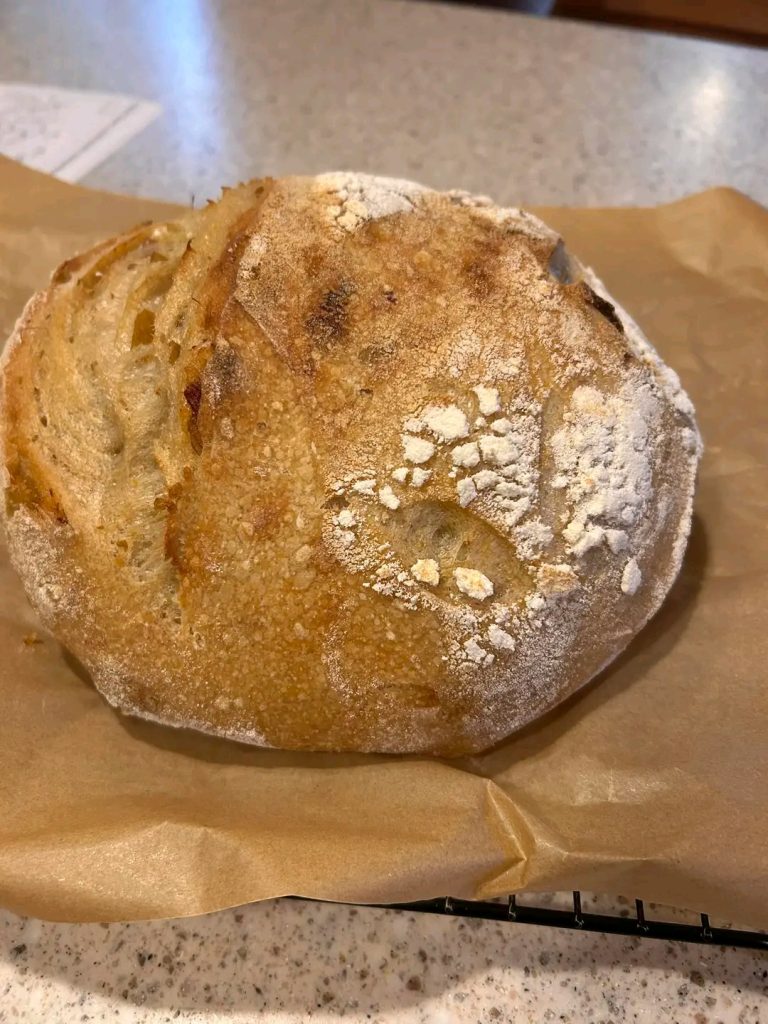
This rustic artisan bread captures the essence of classic homemade baking: a crisp, golden crust, a soft open crumb, and deep flavor developed through slow fermentation. It’s the kind of loaf that fills the kitchen with warmth and aroma, ideal for beginners and seasoned bakers alike.
Ingredients
- Bread flour
- Water
- Active sourdough starter or instant yeast
- Salt
Instructions
- Prepare the dough: Combine the flour, water, and starter (or yeast) in a large bowl. Mix until no dry spots remain. Let the dough rest to allow the flour to hydrate.
- Develop gluten: Add the salt, then stretch and fold the dough several times until smooth and elastic.
- Bulk fermentation: Cover and let the dough rise at room temperature until almost doubled, developing bubbles and strength.
- Shape: Dust your work surface lightly, then shape the dough into a tight round loaf. Transfer to a floured proofing basket or a bowl lined with a kitchen towel.
- Final rise: Let the dough rest until puffy and slightly expanded.
- Preheat the oven: Heat a Dutch oven inside your oven to create steam, which is key for a crisp crust.
- Score and bake: Gently transfer the dough onto parchment, score the top, and bake covered to trap steam. Remove the lid halfway through to brown the crust.
- Cool completely: Allow the loaf to cool on a rack before slicing to preserve texture.
Serving Suggestions
- Pair it with olive oil and herbs for a simple appetizer.
- Serve alongside soups or stews to add warmth and heartiness.
- Toast slices and top them with butter, jam, or soft cheeses.
- Use it as a base for gourmet sandwiches.
Discussion Questions
- Which fermentation time gives you the best flavor in your loaf?
- Do you prefer a very open crumb or a denser, more structured interior?
- What creative scoring patterns have you tried or would like to try?
- Have you experimented with mix-ins such as seeds, herbs, or roasted garlic?
Notes
- High-hydration doughs create a more open crumb; adjust water gradually if you’re new to handling sticky doughs.
- The Dutch oven technique helps mimic professional steam-injected ovens.
- Allowing the loaf to cool is essential—cutting early can make the crumb gummy.
- If using sourdough, the flavor and fermentation time depend on starter activity and room temperature.
FAQs
Can I make this recipe without a Dutch oven?
Yes—use a baking stone and place a tray of hot water at the bottom of the oven to generate steam.
How can I tell when the bread is fully baked?
The crust should be deep golden, and the loaf should sound hollow when tapped on the bottom.
Can I substitute whole-wheat flour?
You can replace up to one-third of the white flour to add flavor and nutrition, though hydration may need adjustment.
How do I store the loaf?
Keep it at room temperature in a paper or breathable bag for up to two days. For longer storage, slice and freeze.